If you are applying to a university abroad and have been asked to provide proof that you can study in English, you may not always need to take IELTS or another English test. A Letter of English Proficiency is an official letter from your school confirming that your degree was taught in English and that you studied and completed your programme using English.
Your school-issued English proficiency letter is not the same thing as an English proficiency test certificate. One confirms the language used during your previous studies, while the other shows the result of a language test you actually took.
In this guide, you will find information about the importance of a Letter of Proficiency, how to get it, documents you will need and a sample of it.
Key Takeaways
- A Letter of English Proficiency is an official document from your university confirming that your programme was taught in English.
- Some universities accept an MOI letter instead of an English test, but others require a recognised English proficiency test.
- You can request a Letter of English Proficiency from your university, usually through an office responsible for academic records or student documents.
- Always check the receiving institution’s requirements before submitting your letter, as an English proficiency letter can be rejected if the university requires a specific English proficiency test.
What is a Letter of English Proficiency
A letter of English proficiency is an official statement from the school where you completed your studies, which serves as proof that you were taught and assessed in English. This letter is also commonly referred to as a Medium of Instruction (MOI) letter, although the exact name can vary from one university to another.
Why is an English proficiency Letter Important?
English proficiency is important if you want to study or work in a country where people speak English.
- It can be an admission requirement: schools would want to make sure that you understand English and that you are able to participate in teamwork with your fellow students.
- It serves as a test waiver: if you were taught in English at your previous school, then an institution may accept an MOI letter instead of asking you to take an English proficiency test.
- International application: An English proficiency letter can help you when applying for scholarships or academic opportunities abroad.
- It shows your level of English: The MOI letter provides evidence that English was the language used to teach during your school days.
How to Get an English Proficiency Certificate from Your University
Getting a letter of English proficiency letter may differ from one university to another, but here is a general step you can follow:
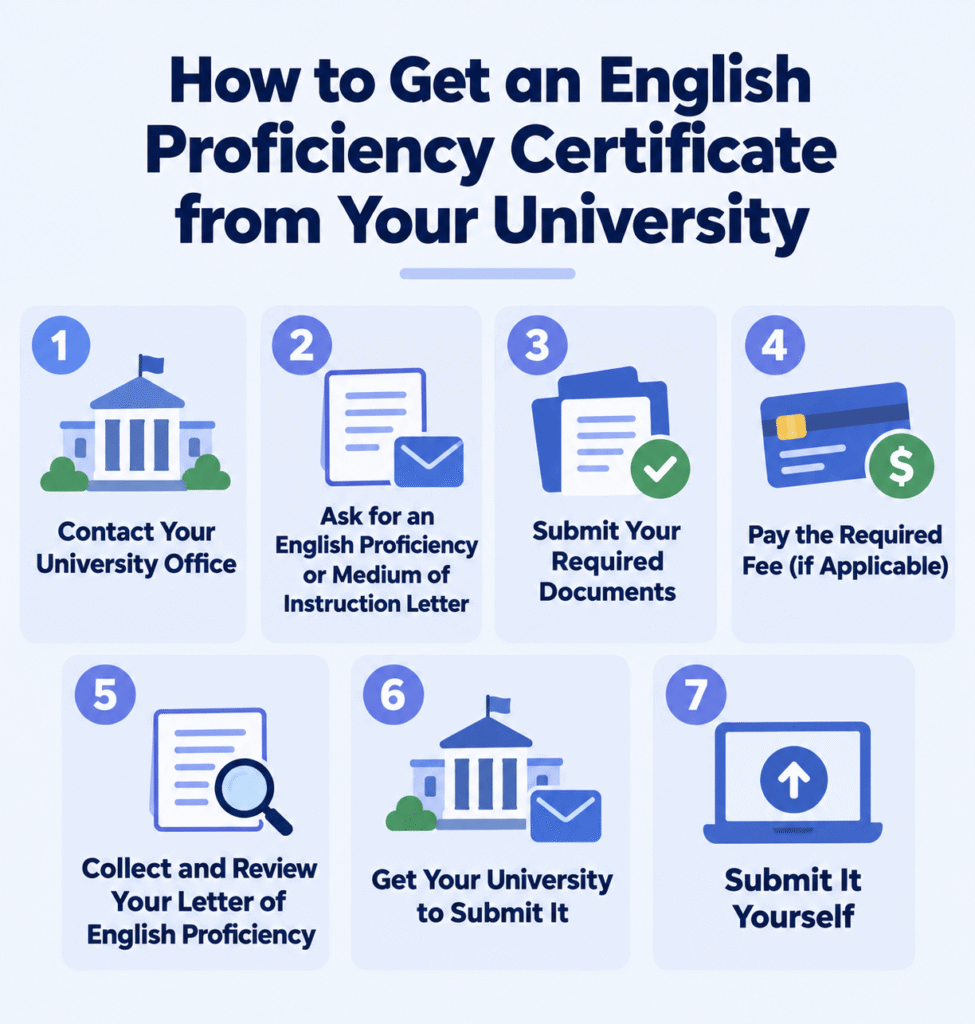
- Contact your university office: Start the process by contacting your university; contact the office responsible for academic records.
- Ask for an English Proficiency or Medium of Instruction letter: Tell the university that you need an official letter of English proficiency or a Medium of Instruction letter that confirms you were taught in English. Make sure to tell the university why you need the letter.
- Submit your required documents: Your university may ask for some documents before giving you the Letter of English Proficiency. These often include your academic transcript, student ID number, a photocopy of your degree certificate, and a request form, so confirm the exact list with your registrar before you apply.
- Pay the required fee (if applicable): Some universities may require payment before giving the letter. Confirm how much the fee for the English proficiency letter is from your university before making payments.
- Collect and review your Letter of English Proficiency: When your letter is ready, collect it and make sure you check that details such as your full name, University name, the course you studied, and the date you completed your studies are correct before submitting
- Get your university to submit it: Some institutions require that your letter of English proficiency be submitted directly to them by your university, so if that applies to you, provide your university with the right email address to send it to. For example Nexford University require this.
- Submit it yourself: If the institution allows you to submit your own Letter of English Proficiency, simply upload or send the document according to the application instructions.
Get your letter of English proficiency
Documents you May Need for your Letter of English Proficiency
The documents required to get a certificate for English proficiency from a university can vary depending on the university. Here are some common documents that you may need;
- An academic transcript
- A student identification number
- A photocopy of your degree certificate
- A document request form
- National identity number
- Application letter from the institution you are applying to
- Proof of payment (if payment is required)
Always check with your university before processing anything.
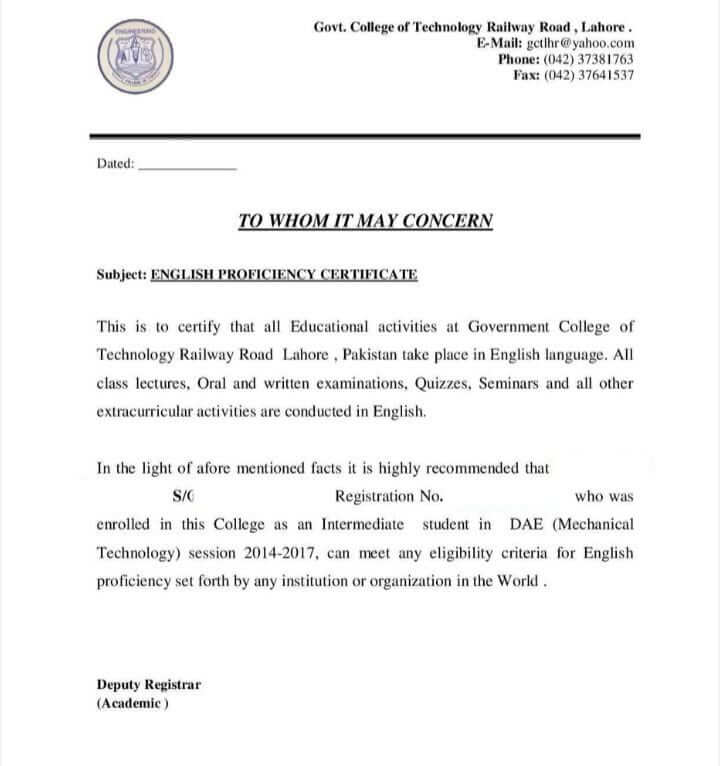
What Should a Valid Letter of English Proficiency Contain?
Here is a list of what a valid English Proficiency letter contains:
- University letterhead/Name
- Title of the letter
- Date issued
- Student’s full name
- Name of course studied
- Qualification obtained
- Duration of study
- Official signature
- University stamp
- Contact details of issuing official
Letter of English Proficiency from a University Sample
Difference Between a Letter for English Proficiency and English Language Proficiency Tests/Exams
A Letter of English Proficiency is a university-issued letter that confirms you studied in English, while an English proficiency test or exam measures your current English ability against a recognised scoring system.
If the university you are applying to does not accept a Letter of English Proficiency or Medium of Instruction (MOI) letter, you may need to take an approved English language proficiency test instead.
Common Reasons for Letter of English Proficiency Rejection
There are several reasons why your letter of English proficiency may get rejected; here are a few
- The University does not accept MOI Letters: This is one of the most common reasons for rejection; some universities require you to provide a recognized English language test such as IELTS, PTE, and TOEFL.
- The letter does not clearly state that your course was taught in English: When your letter isn’t properly written and clearly states that your course of study was taught entirely in English, then you may risk rejection.
- Your letter cannot be verified: Your letter of English proficiency must be genuine and obtained from your university. If the letter does not contain official contact information, then the school receiving it may not accept it.
Frequently Asked Questions
No, you can not write your own letter of proficiency yourself.
Yes. Some universities call it a Letter of English Proficiency while some call it a Medium of Instruction (MOI).
You can get a letter of English proficiency from your school.
No, a Letter of English proficiency does not have an expiry date.
Conclusion
Getting proof of English proficiency does not always mean you have to take IELTS or another English language test. If you studied in English, your university may be able to provide a Letter of English Proficiency or Medium of Instruction (MOI) letter confirming that English is the language that was used during your studies.
Taking these steps can help you avoid unnecessary costs, delays, and rejected documents during your application. Always confirm what type of English proficiency proof your institution accepts first.
If you need assistance in getting your letter of English proficiency, contact a reliable document agency for professional help.
Get a letter of English proficiency